Case study · Momentum Worldwide · American Express
A Wimbledon sponsorship, made playable.
UI and UX design for the American Express Fan Experience at The Championships, Wimbledon 2022, with Momentum Worldwide: two walk-up games for thousands of fans a day, designed to be understood in seconds and played straight out of a queue.
- Role
- UI & UX Designer
- Agency · Client
- Momentum Worldwide · American Express
- When
- May–July 2022, for Wimbledon 2022
- Status
- Ran for three seasons · Find Andy now in the Wimbledon Lawn Tennis Museum

Overview
Hospitality for some. A game for everyone.
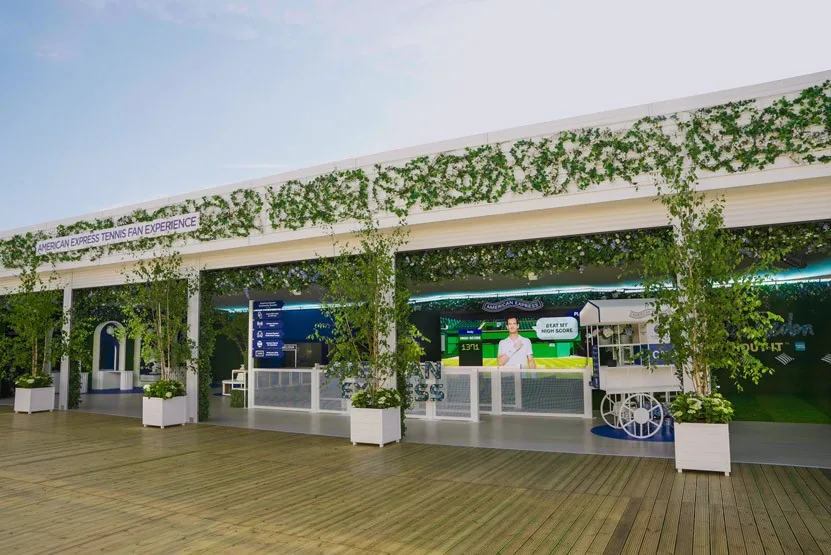
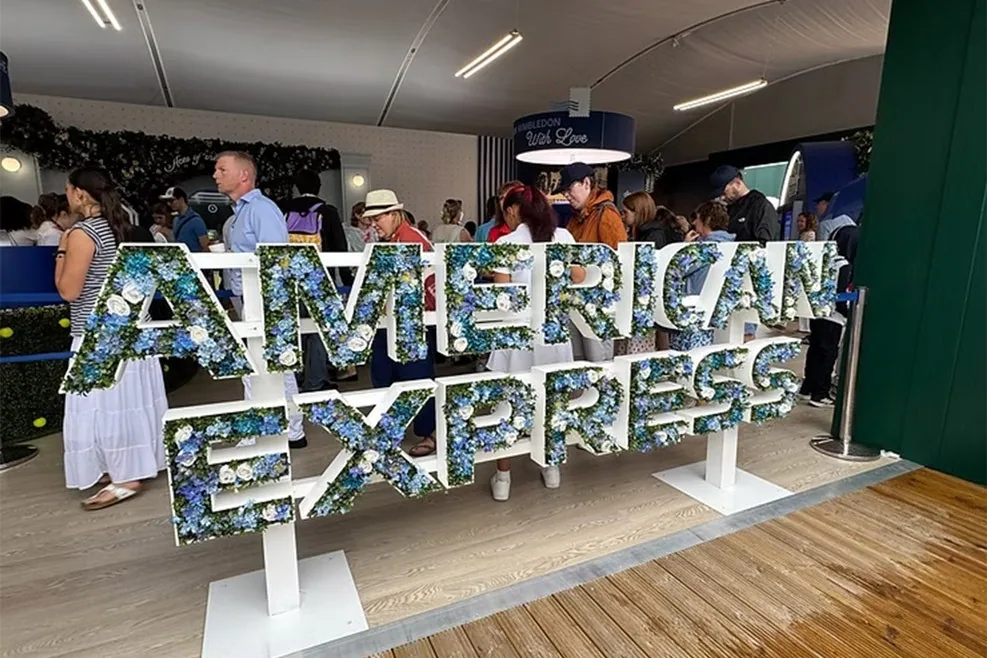
American Express has sponsored The Championships for years, and Momentum Worldwide looks after how the brand shows up on the grounds, from the Pavilion and the Queue to the Cardmember Lounge. The Fan Experience is the open part: a space any fan can walk into.
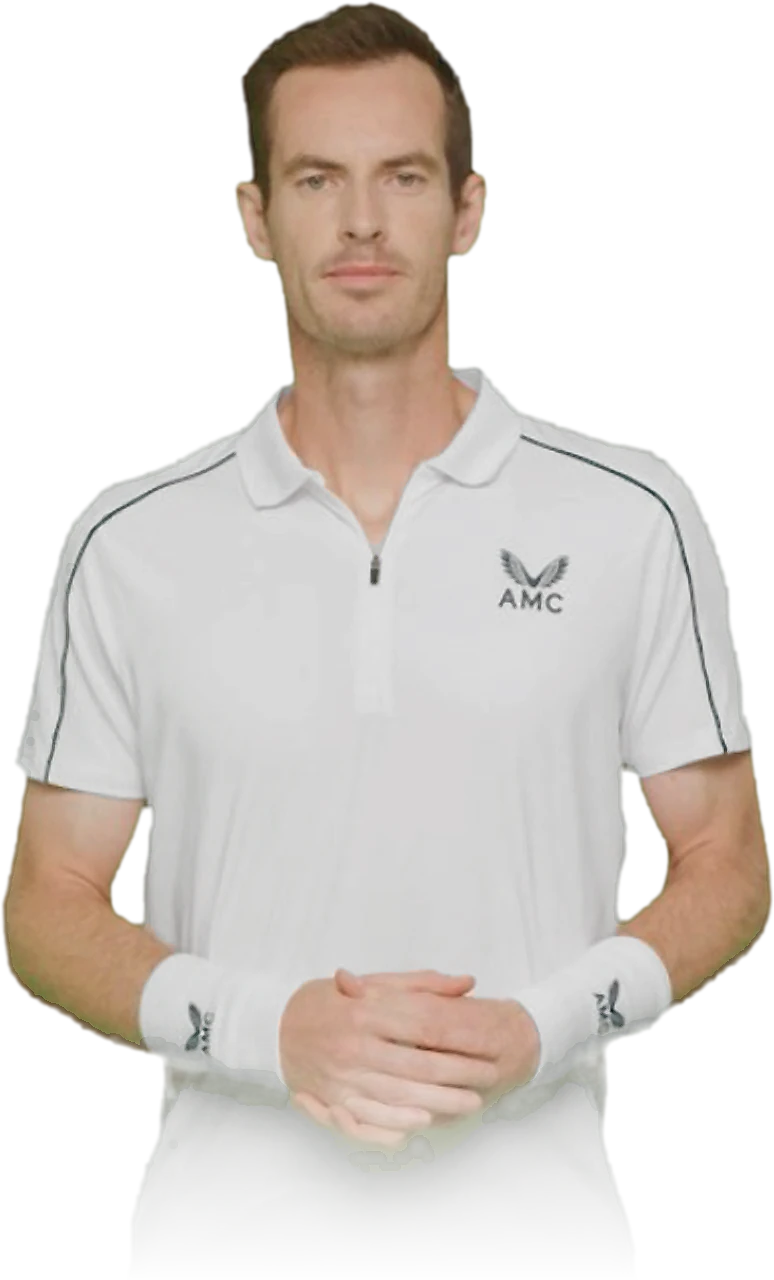
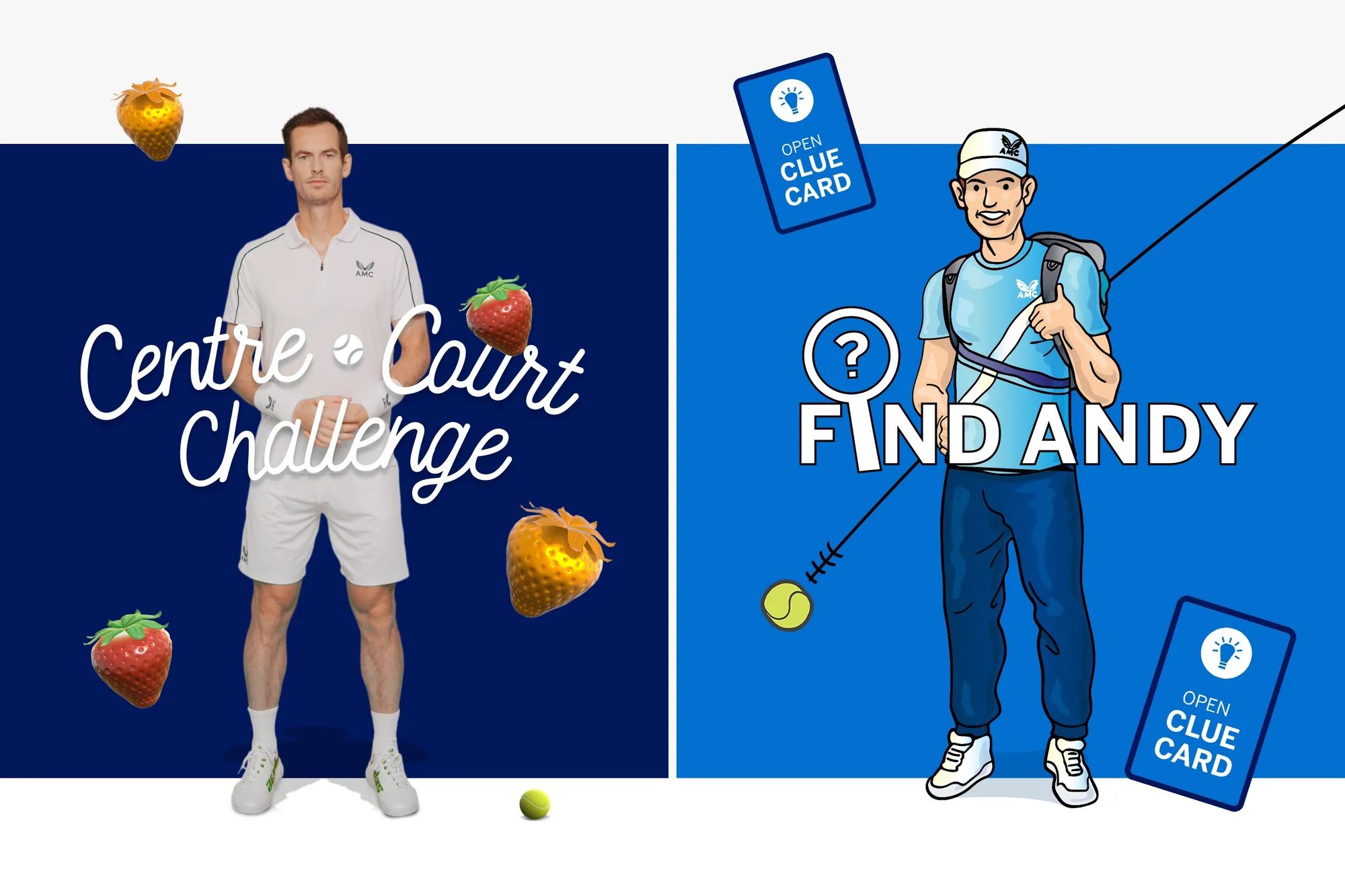
The brief was to give those fans something worth queuing for. The answer was two games, built with Momentum’s creative technology team and fronted by Andy Murray: Centre Court Challenge and Find Andy. I was the UI and UX designer for both.
The brief
Premium, playful, and quick.
Open to every fan
The Fan Experience is for anyone on the grounds, not only Card Members — so nothing could assume a sign-up, an app or an account.
Understood in seconds
People arrive in a queue, often in a group, often with children. A game had to explain itself before anyone read a word.
Thousands a day
A small footprint and a two-week run meant every extra second per player became a longer queue outside.
Outdoors, in July
Hardware, screens and flows had to keep working through sun, rain and constant handover between players.
Watch
See both games in play.
Game one
Centre Court Challenge
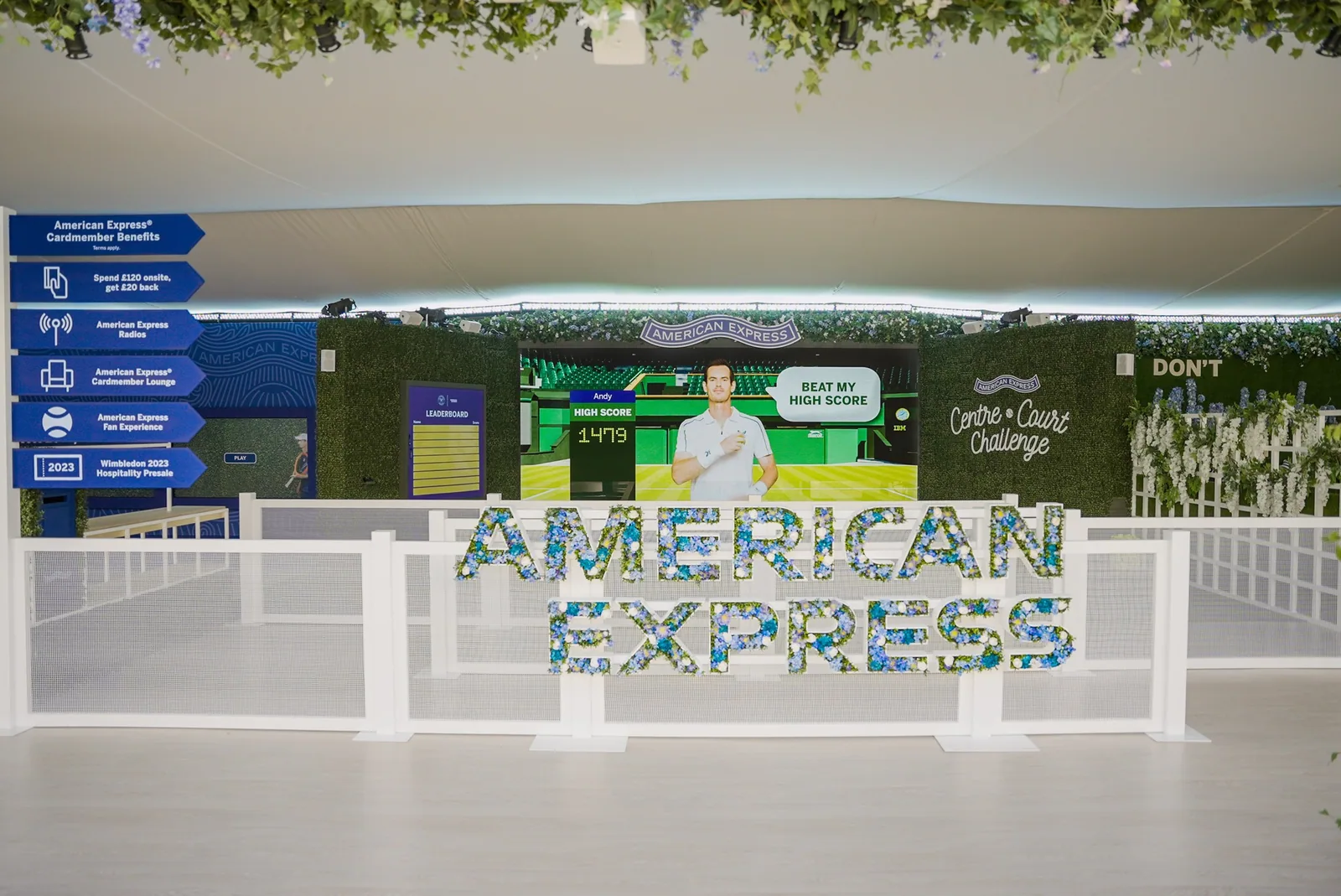
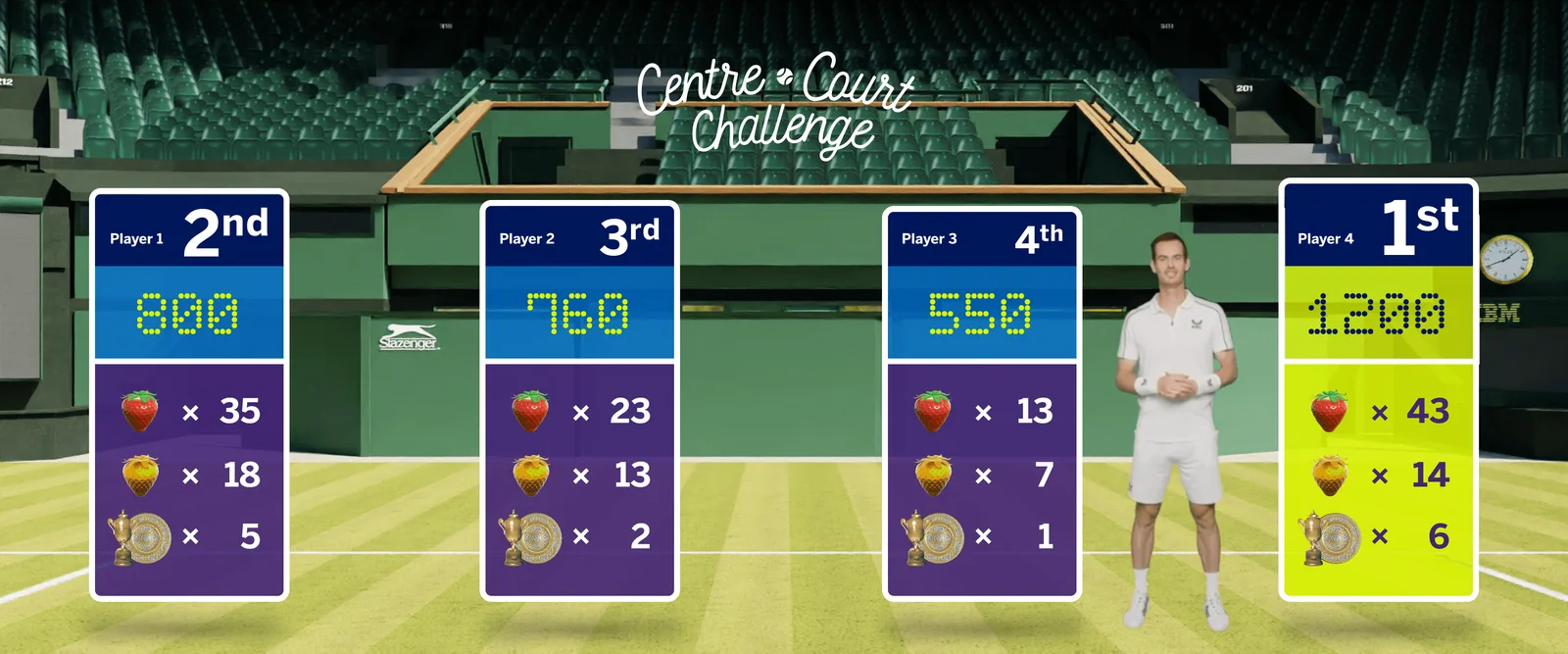
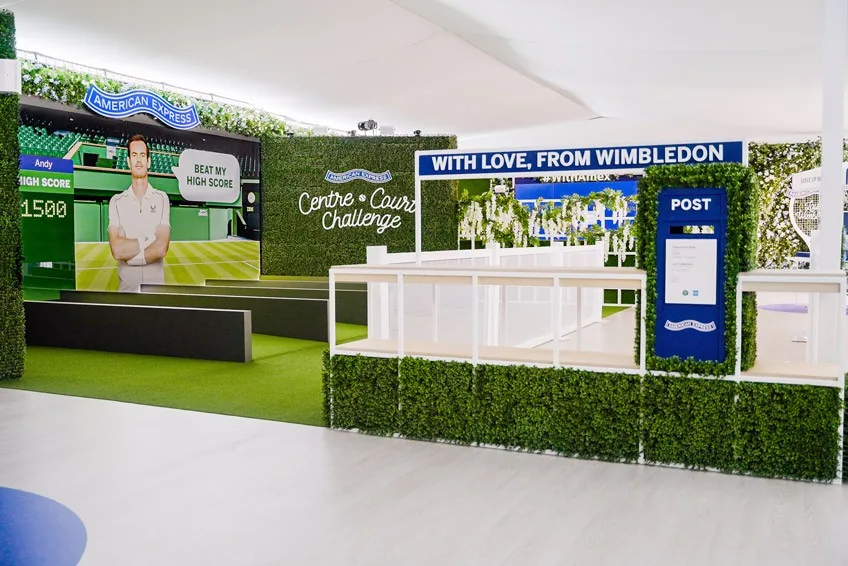
Players take the role of a ball kid, rolling real tennis balls at targets on a screen against the clock. Up to four people play at once, with a leaderboard to argue over afterwards.
The physical input and the digital feedback had to feel like one thing, so a child’s first roll landed with the same satisfaction as a good serve.
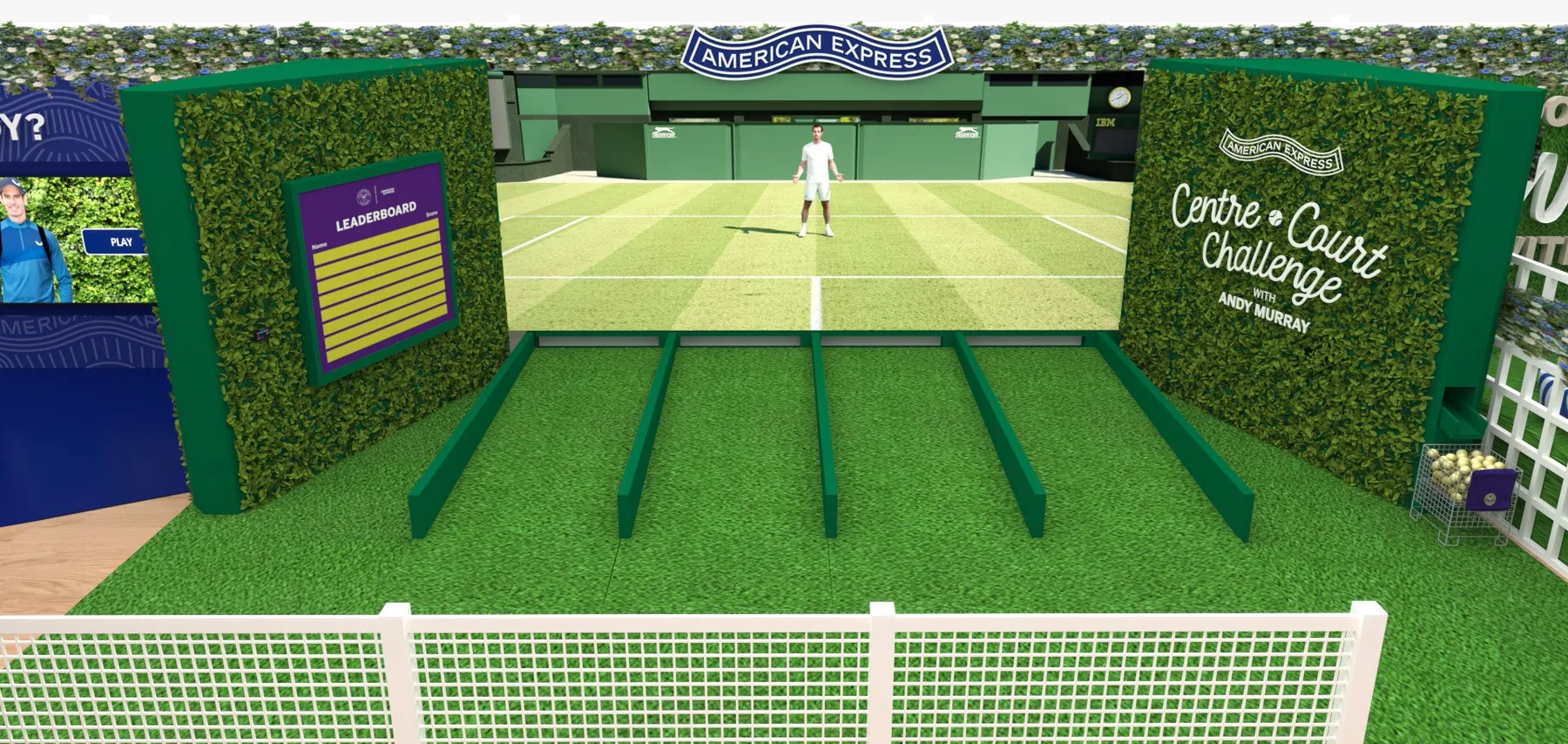
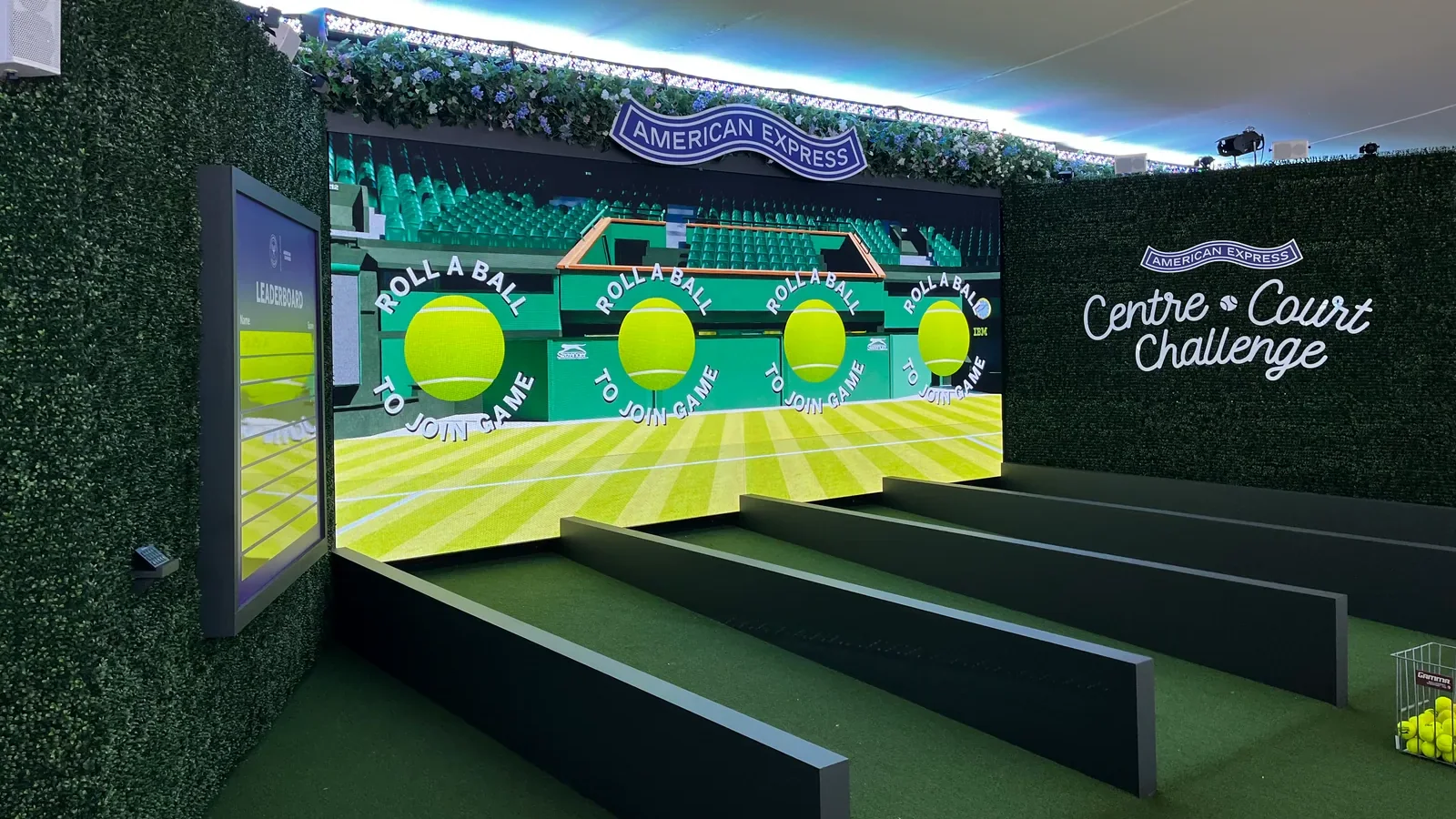
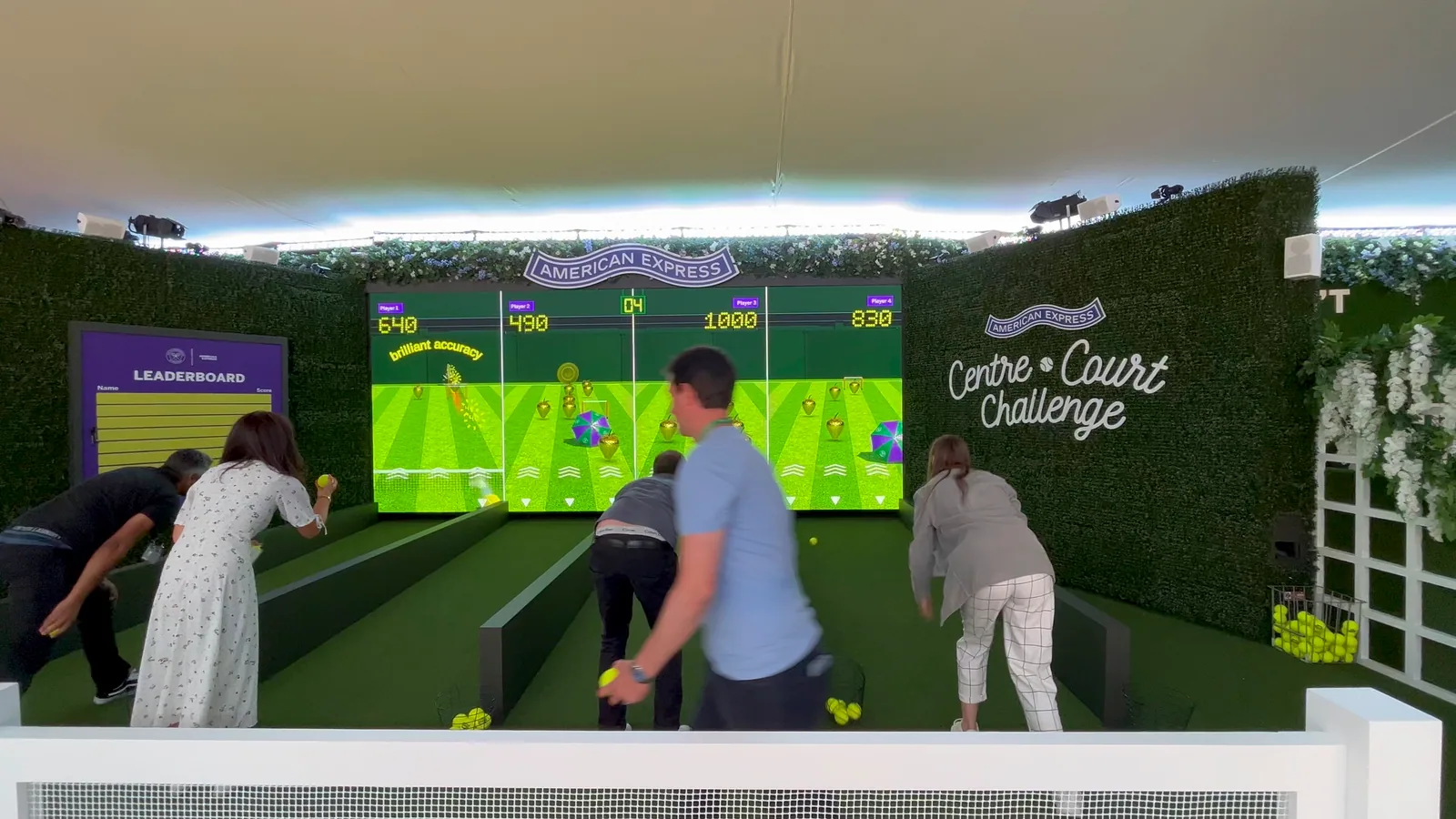
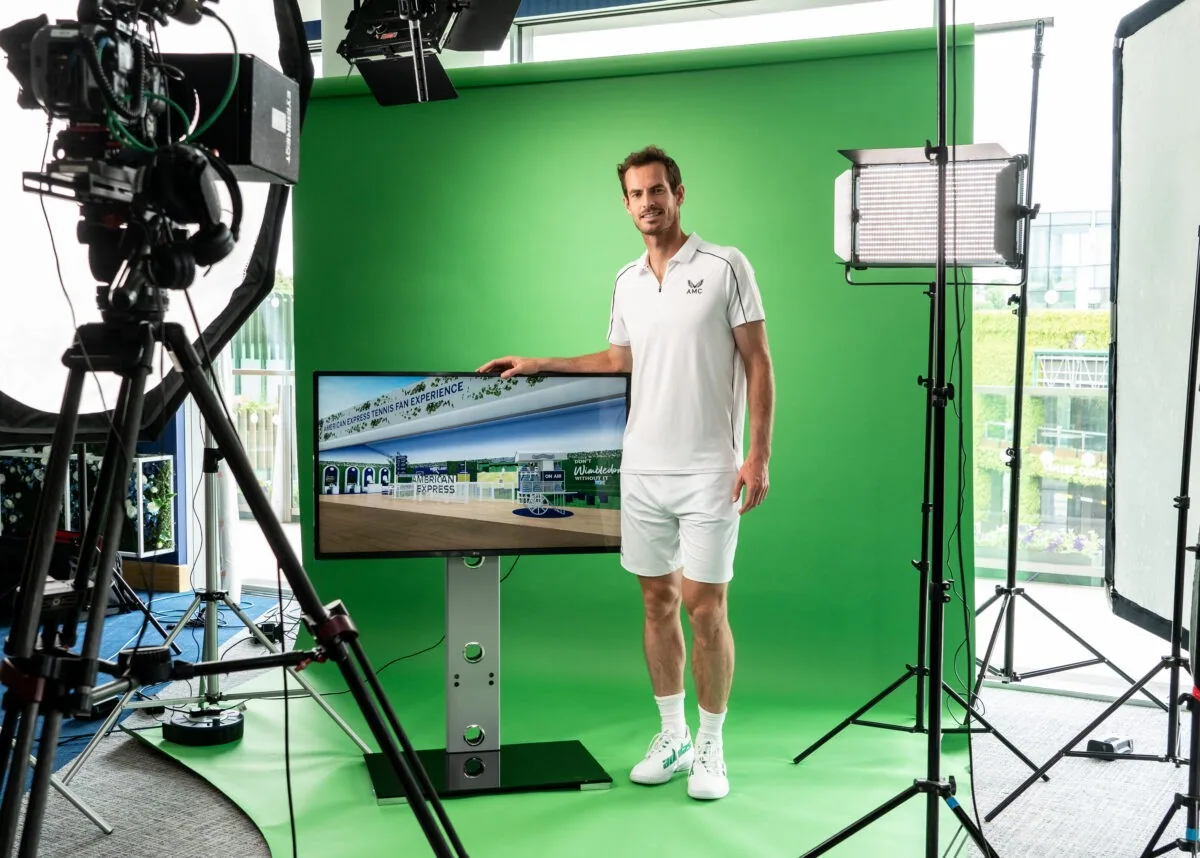
Andy as the host.
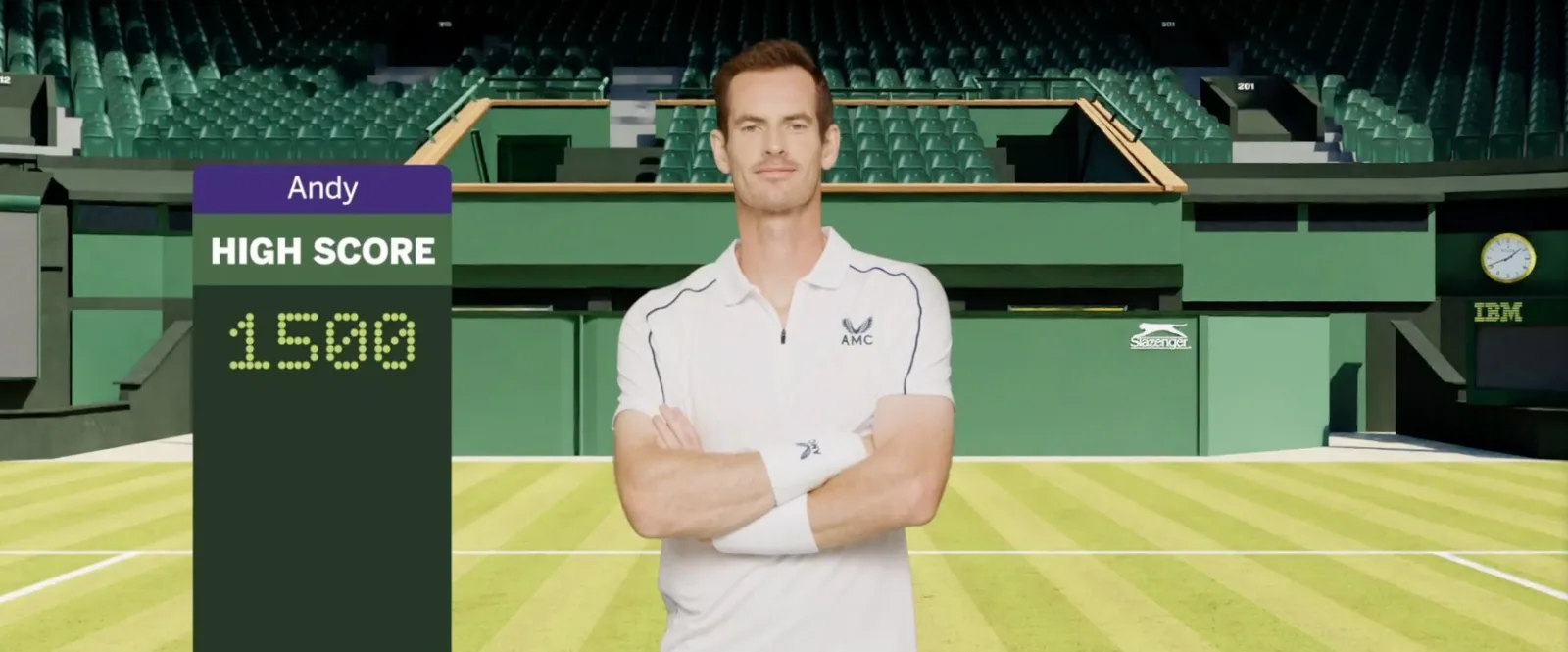
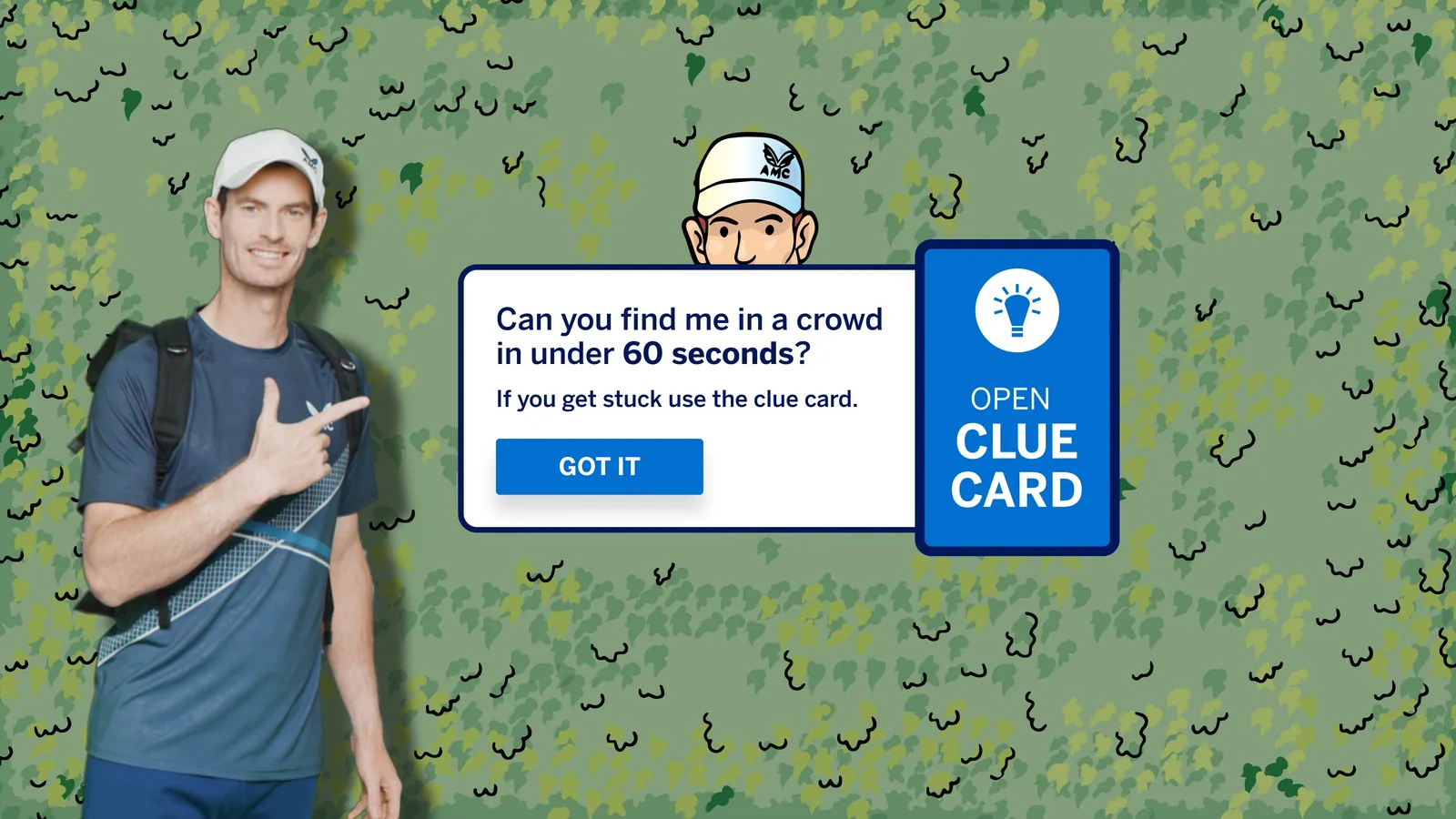
Andy Murray was filmed on a green screen so he could run the game himself: explaining it, cheering players on, and reacting when a roll went wide. The screens were laid out with room for him, from the score to beat to the final results.
Game two
Find Andy
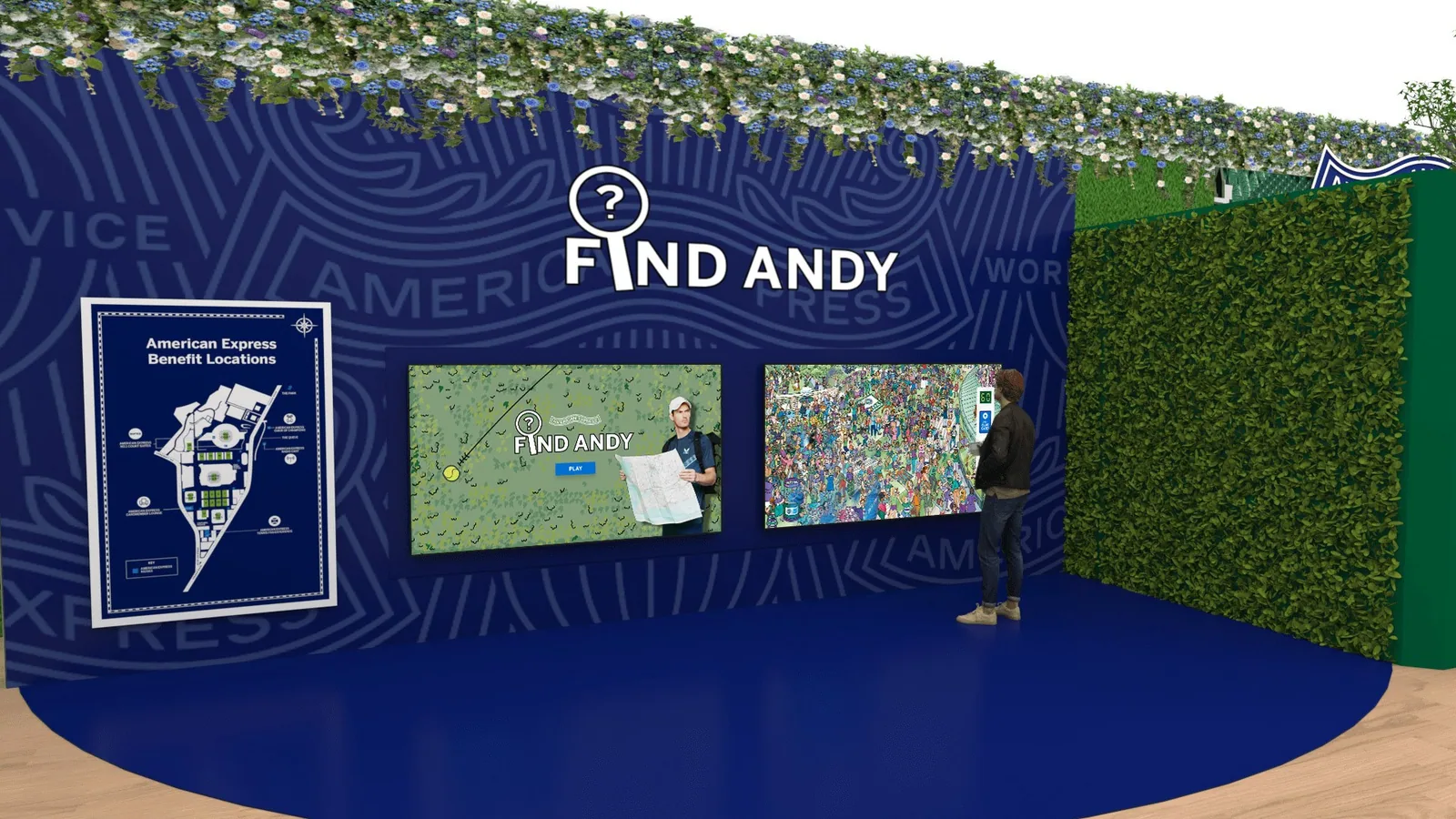
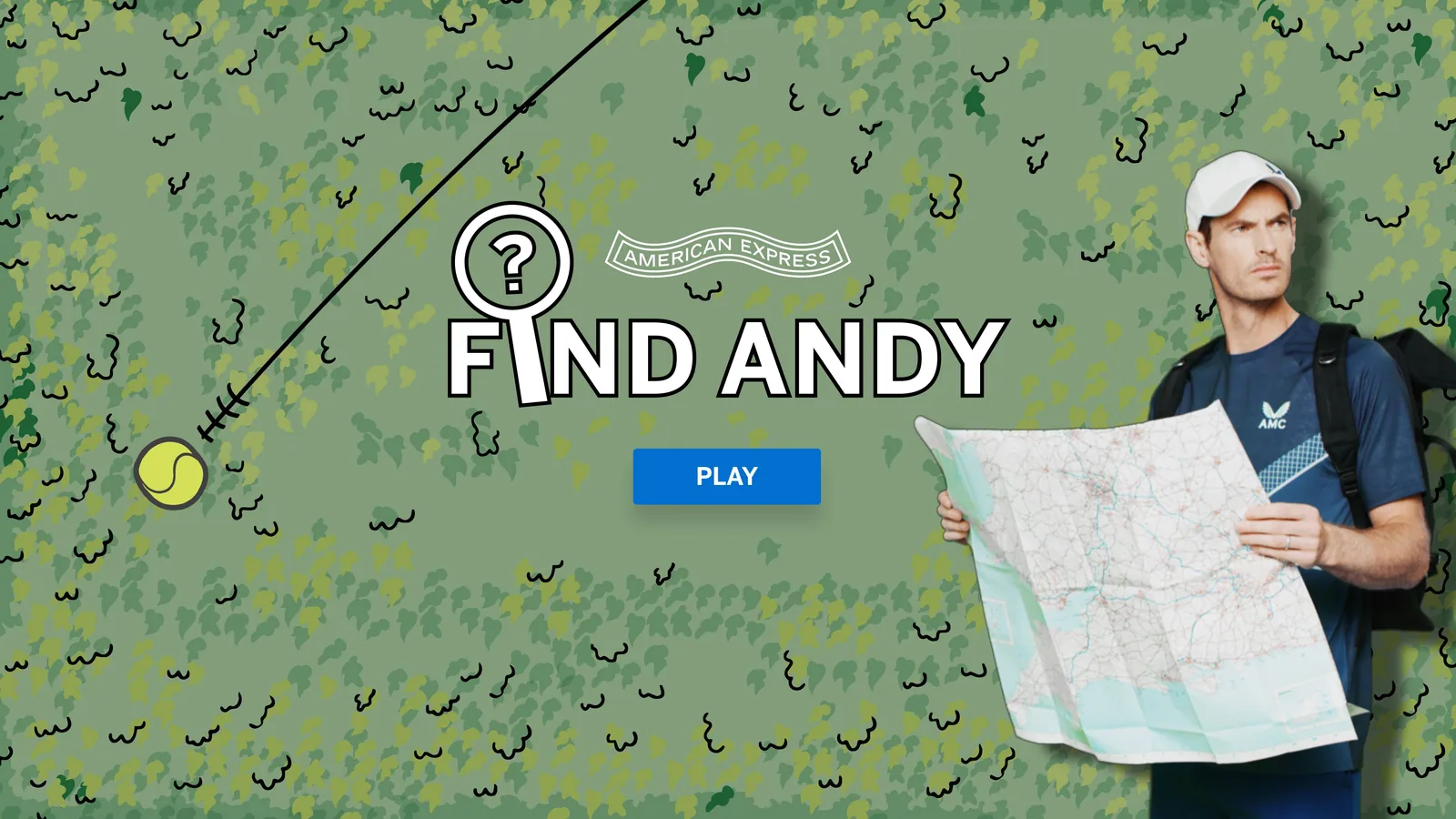
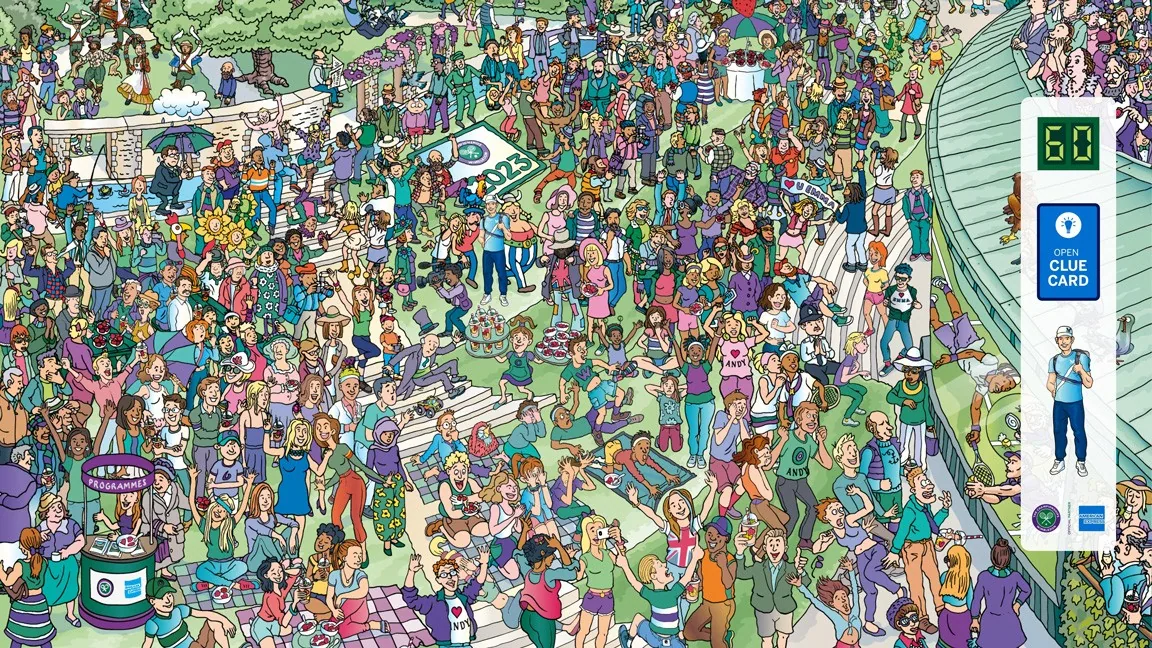
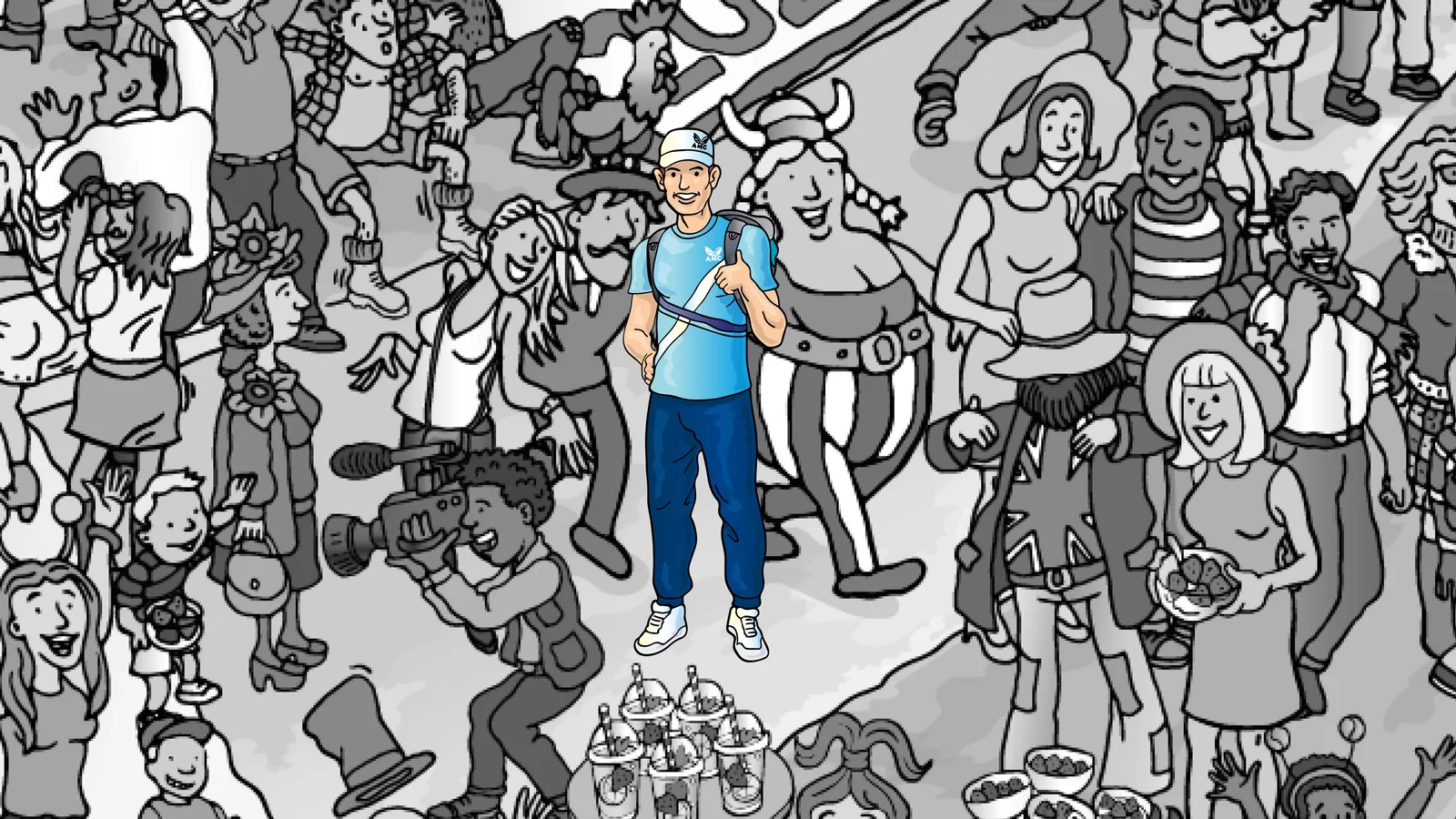
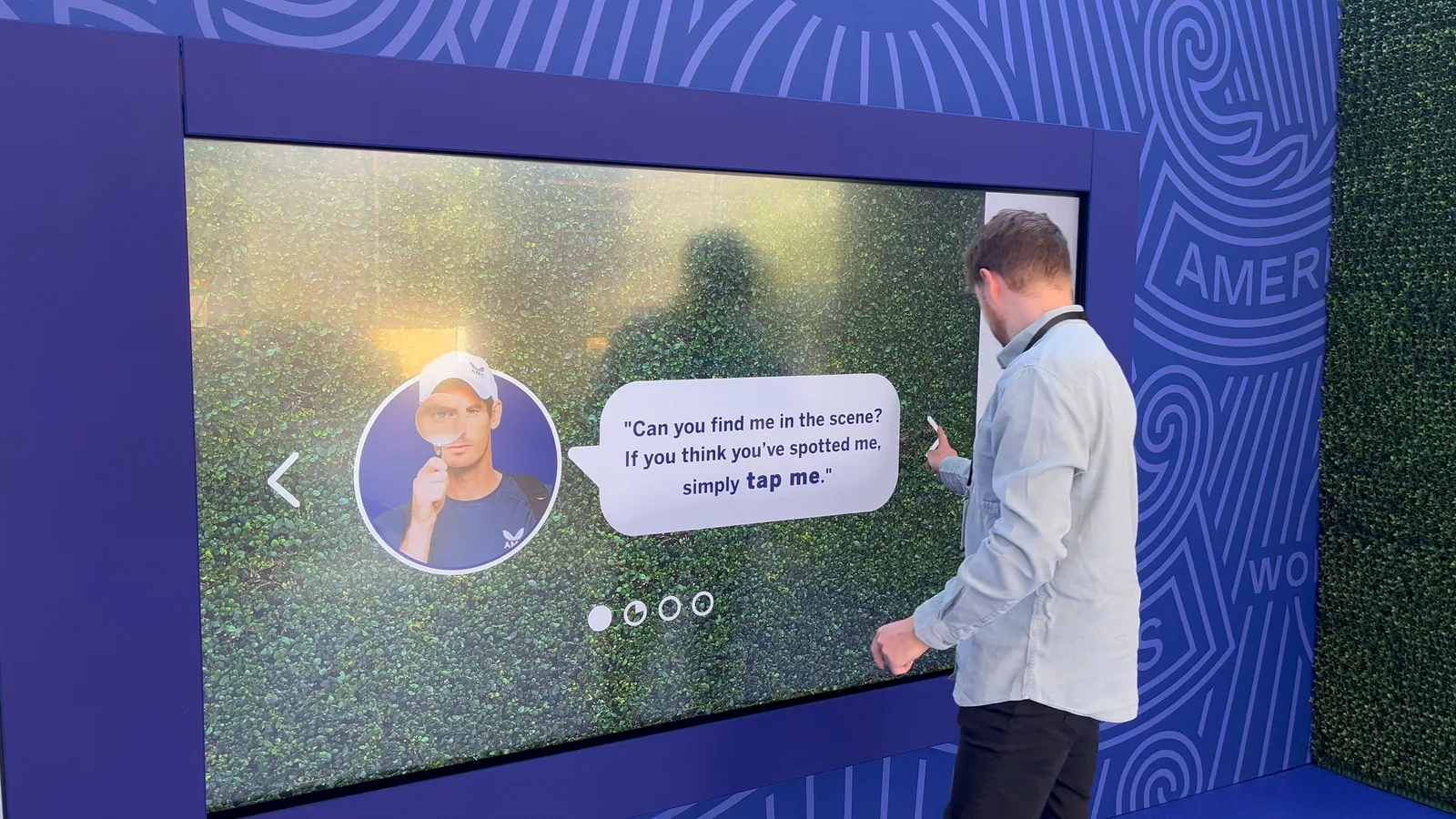
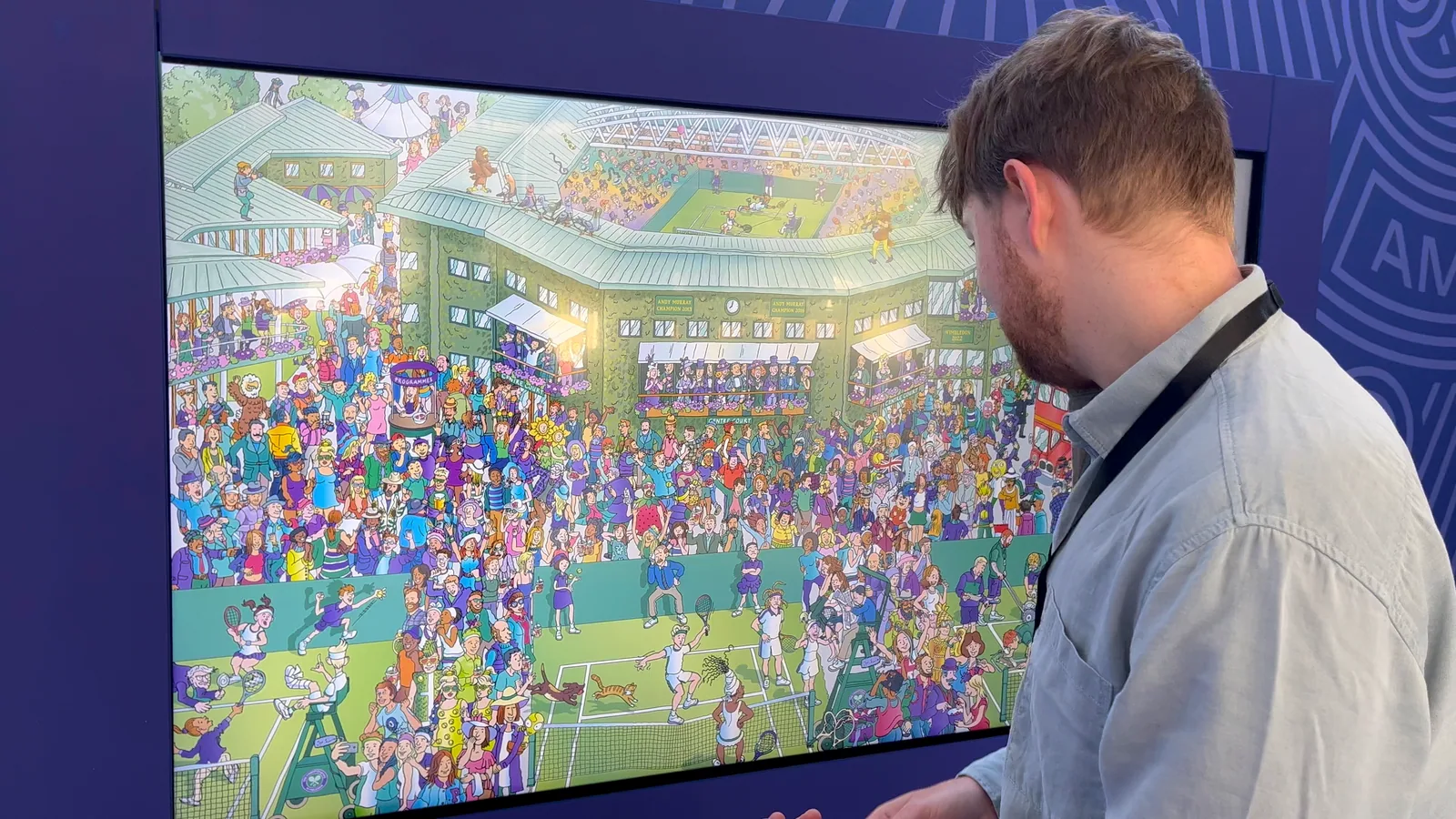
A hidden-object game on four commissioned illustrations of the grounds, each crowded with detail and hiding one Andy Murray. It is touch-only, needs no explanation, and suits the people a tennis queue is full of: families, groups and anyone killing ten minutes before a match.
After three seasons on site, Find Andy was retired to the Wimbledon Lawn Tennis Museum.
My part
Designing for a queue.
How does someone who has never seen the game start playing in seconds, enjoy it, and hand over to the next person with no help from staff?
Under John Buckell’s design direction, across a three-month build from first flows to opening day.
Game one
Centre Court Challenge
The player flow from attract screen to results, the four-lane layout, the leaderboard, and where Andy appears.
Game two
Find Andy
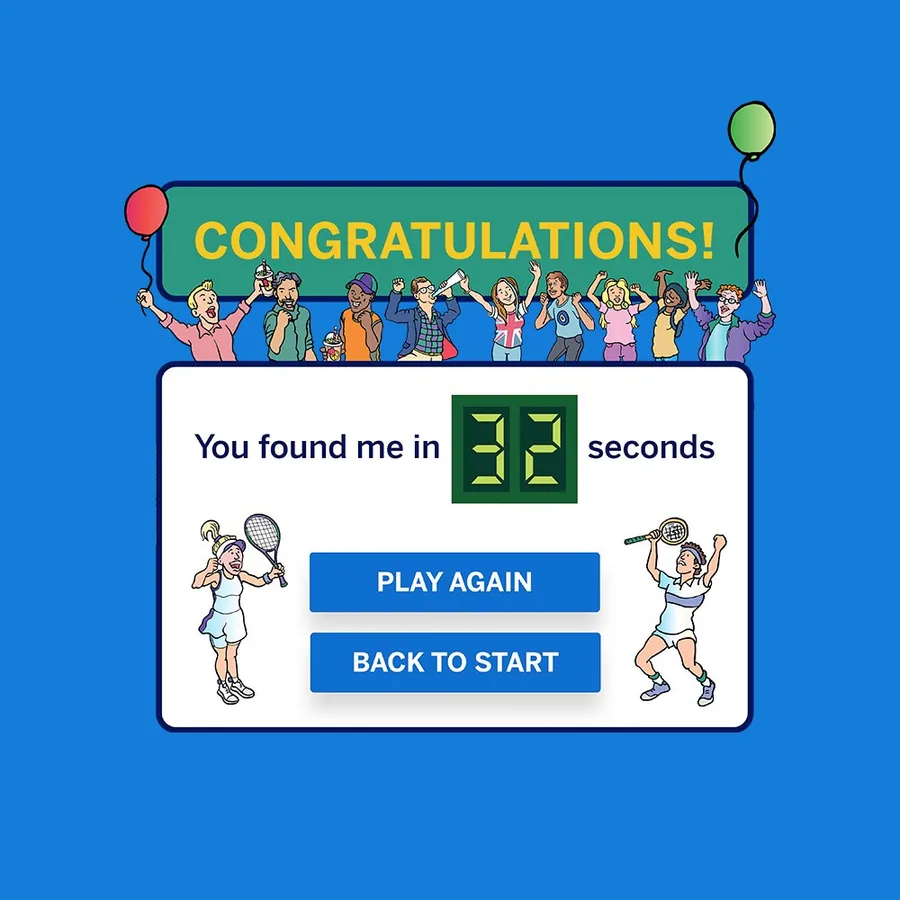
The touch flow across four illustrated maps, and every state of the interface.
Handover
Ready to build
Every screen state for both games, so the creative technology team had the full picture before the build.
The screens did the explaining.
- 01
Show it
The attract screen plays the game, so people learn it while they queue.
- 02
Start on the first move
A roll or a tap begins play, with nothing to sign up for.
- 03
Hand over
Results clear the way for the next group, with no reset from staff.
Outcomes
Queues people chose to join.
- Opened for Wimbledon 2022
- Both games went from first flows to live play on the grounds in three months, and ran through the two weeks of the Championships.
- Three seasons on site
- The games came back each summer. After its third Championships, Find Andy was retired to the Wimbledon Lawn Tennis Museum.
- Record engagement in 2024
- The Fan Experience had its busiest year with the two games still at its heart, with queues forming for both every day.
- Still being refined
- In later seasons the team moved the instructions off the game screen and onto a screen beside the queue, so people arrived ready to play and more matches were played each day.
Team
Made with Momentum Worldwide.
- Agency
- Momentum Worldwide
- Design Director
- John Buckell
- UI & UX Design
- R. Kirán Khan
- Creative Technology
- Jack Osborn, Phil Barker, Carl Flint
- Game Development
- Matt Glanville
- Art Direction
- Leanne Parkinson, Lauren Atkinson
- Producer
- Matthew Martin
- Account Lead
- Alex Faulkner
The on-site photos of both games in play are my own, taken at Wimbledon in 2022. The renders, game screens, artwork and films are the Momentum Worldwide team’s, shared courtesy of John Buckell. There’s more on John’s case study: whatthebuckell.design/wimbledon.